
Is Job Shadowing the Missing Step in Your Career Transition?

Recently, I have received an influx of coaching calls from individuals who are looking to make a career change, unsure whether to continue climbing the corporate ladder within their organization or to start on a new ladder. In one of my previous articles, Rethinking Career Advancement: Beyond the Corporate Ladder, I encouraged readers to view their career paths not as a ladder but as a roadmap with many available destinations.

Many people tell me that they love their company but do not see how that roadmap applies where they work. Some simply need help identifying the right areas to explore or the right people to connect with inside of their organization. Others may need to consider opportunities outside of their current organization, and this doesn’t mean that they need to leave their current organization. There are many volunteer opportunities out there that are great options for folks to gain experience without having to invest fully into a new adventure.

Lessons from My Own Career Change

When I faced this question myself, I learned several important lessons. Early in my career, I gained experience on strategic planning and organizational improvement. Over time, I began to specialize in operations, working closely with front-line employees to improve processes. I eventually reached a turning point in my career. One path would have led me toward branch management in the earth-moving industry; the other toward executive coaching. I chose the latter and, in 2009, shifted from doing improvement work to leading it. It was the best move of my career, though far from an easy one.

The transition required perseverance. For seven years, I worked as a consultant across Western Colorado while pursuing a business degree to strengthen my credentials. I have since facilitated hundreds of training classes, strategic problem-solving workshops, and spoken at innovation and performance conferences across various sectors, including hospitality, government, transportation, recreation, and healthcare. I followed a 15-year plan that I created using a simple visioning template, which focused on two areas:

  1. Outline where you want to be. This is not about a title or paycheck. It is about understanding your personal and professional identity—who you are, what you value, and what energizes you.
  2. Experience the role in person: A new step that I have added to my coaching sessions recently, and one that I had wished that I had done myself.
  3. Outline how you plan to get there. Identify your path forward at a high level so you can adjust as you go. Typically, that plan should include three areas of focus: education, experience, and professional relationships.

A Different Approach

Once you gain clarity on who you are and what inspires you, pause before moving onto the final step. I recommend taking an additional step that few people consider: experience the role in person.

Rather than immediately enrolling in courses, updating your résumé, or attending networking events, make sure that the role is truly the right fit. Many organizations, especially in the public sector, offer opportunities for site visits or job shadowing. There are also a bunch of volunteer opportunities out there. Identify one that aligns with your interests and connect with professionals in that field. I often encourage clients to partner with two or three individuals that they admire, shadow them, and learn about what their average day actually looks like.

For instance, many people who shadow me expect to see classroom facilitation, assuming that is where I spend most of my time. In reality, teaching occupies less than ten percent of my schedule. The majority of my work involves one-on-one conversations with leaders, helping them navigate challenges and documenting action plans. If someone pursued this career believing that it was primarily a teaching role, they might have been disappointed. Plus, having them shadow one of my classes may have confirmed that their career path was the right choice, but only to be further disappointed if this became a small portion of their full responsibilities. There are plenty of teaching opportunities out there, and I have shadowed a few professors, and even behind the scenes in their shoes is often different than what one might expect.

Job shadowing allows you to uncover the realities behind the perception. It reveals the work, the challenges, and the organizational culture in ways that job descriptions or interviews cannot.

Asking the Right Questions

When you reach out to professionals to shadow, be thoughtful about how you ask questions. Avoid general prompts such as “What does an average week look like?” Instead, ask:

  • “What has been on your calendar for the past two weeks that you are excited about? What are you not as excited about”
  • “What is coming up over the next two weeks?”

These questions provide a more accurate picture of the role and invite deeper discussion. If you notice major differences between past and upcoming weeks, ask why. Has something changed? Are there recurring priorities that often get postponed? These insights help you understand the organization’s rhythm, challenges, and culture.

On a sidenote, the above questions are also excellent ones to ask during a job interview. Another strong interview question is, “What reservations might you have about my credentials or ability to perform this role?” This allows you to address any misconceptions directly and leave a strong impression. Be genuine, especially when discussing organizational culture. If it is not the right fit, acknowledge it honestly.

The Bottom Line

Career transformation requires more than planning; it requires exploration. Just as I coach leaders to avoid analysis paralysis, which occurs when excessive planning and overthinking prevent action, it is important to take incremental steps, learn from experience, and adjust along the way. Engage directly with the work you aspire to do. Shadow professionals, ask thoughtful questions, and gain firsthand understanding before making your next move. Whether you are advancing, pivoting, or starting anew, clarity comes from experience and curiosity.

If you would like to learn more about the visioning template that I use or discuss your own career transition, I welcome the opportunity to connect. I do not charge for these conversations, although I must limit how many I am able to offer. Good luck on your journey.

Tagged with: , , , , , , , ,
Posted in All

Rethinking Career Advancement: Beyond the Corporate Ladder

I’ve always believed there are multiple pathways to success. The problem is that our organizations were built on an outdated belief that the only way to succeed is to climb the corporate ladder toward leadership roles. But here’s the reality: we can’t all be climbing toward the CEO position, and more importantly, that path doesn’t match everybody’s career goals.

In this video, shared with us by the City County of Denver’s Learning and Development team during a leadership training, Keyanna Schmiedl challenges this outdated vision with a perspective that deeply resonated with me. She introduces the idea of career development as a rock wall instead—with multiple routes, opportunities to move laterally, and the flexibility to define success on your own terms. Whether that means expanding your scope horizontally, building new skills, or even strategically stepping back, all paths are valid.
What I found particularly compelling is her emphasis on leading with your strengths and creating space for professionals to thrive without following a traditional leadership trajectory.

I’d encourage you to watch the full video. Schmiedl’s insights offer a liberating framework for sustainable career growth that honors your individual goals and circumstances.

Posted in All, TED Talks & Other Videos

Are You Expecting AI to Do Your Thinking For You?

Here is a sneak peek of a talk that I am working on about how to better leverage AI as a thinking partner, not to take over your thinking completely.

Remember Office Space when the consultants show up and everyone expects magic? They ask surface-level questions, miss the real problems, and management still hopes everything will be fixed.

Now imagine AI in that same role. Are you handing your organizational challenges over to AI and expecting instant, perfect answers? If so, this upcoming talk is for you.

In this preview, you’ll see:

  • The two AI camps: Resisters vs. Over-Reliers
  • Why giving AI your work without thinking first is like outsourcing surface-level problems to a consultant and expecting magical results
  • How AI can work like great consulting—helping you discover solutions instead of imposing them
Tagged with: , , ,
Posted in All

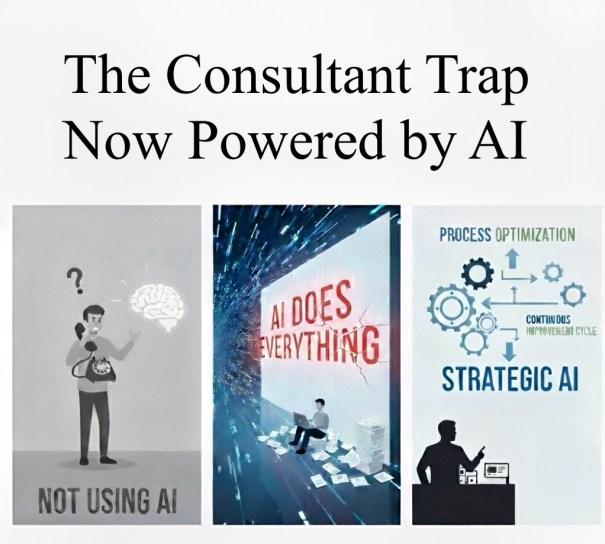
The Consultant Trap—Now Powered by AI


Last night, in a meeting about our growing dependence on consultants, it hit me: we’re making the exact same mistake with AI.

How do I know? Because I used to be one of those consultants.

Fifteen years ago, I would disappear with a client’s data and processes, reemerge weeks later with a perfect solution, and watch it fail spectacularly. Every single time.

Why? Because solutions don’t come from isolation. They come from the people doing the work.

The breakthrough came when I stopped being the solution person and started asking the right questions. I stopped delivering answers and started facilitating conversations where employees discovered their own. Suddenly, things actually got implemented.

Now, we’re doing the same thing with AI.

We treat it like a search engine; type a question, get an answer and move on. But here’s the thing: if you’re not great at searching Google, your AI won’t be any better. You’re just outsourcing bad search skills to a fancier tool.

AI isn’t a search engine. And just like those consultants, it can either impose solutions or help you think. The difference lies in how you use it.

Right now, I see two camps forming:
• The AI Resisters are still doing everything manually, falling behind while their competitors move at lightning speed.
• The AI Over-Reliers are dumping prompts into ChatGPT, Claude, Gemini, or whatever new AI pops up, and calling whatever comes back “good enough.” Then they show up to meetings unable to defend their work because they never actually thought about it themselves.

But here’s the truth, AI can work the way good consulting does now. It can help you discover solutions instead of imposing them. But only if you do the thinking first. Just like how I typed this article first by hand, then ran pieces of it though AI to apply some polish.

The world isn’t ready for brain-dead automation yet. And honestly, we need you to keep thinking.

That’s exactly why I started using a persona template, which is a tool that I have relied on for years and recently adapted for AI. It helps clarify your strategy, preferences, and what you hope to gain before you ever type a prompt.

I use it every week to plan meetings: to define what I want to achieve, what I hope to learn, and what my role is in the conversation. When you give AI that same context, you set yourself up for success, just like walking into a meeting prepared.

You bring research. You bring perspective. You bring intent.

And remember, it’s perfectly fine to say, “I don’t know the answer to that. Let me find out.” That’s how learning happens.

As many of you know, I’ve been toying with launching an organizational learning podcast through my YouTube channel, The Improvement Habit. I recently revived the channel and I’m creating a video on AI. It’s a conversation I think we need to have more often.

Drop a comment below and share what’s been working for you, or what you’d like to explore next.

Tagged with: , , , , ,
Posted in All, Motivation

Root Cause Analysis

Getting to the root cause of a problem is the first step taken to understand how to fix the problem. After all, if you do not know what is causing the problem, how are you going to fix it? Read more ›

Tagged with: , , ,
Posted in Lean Toolbox, Problem Solving

“How to Build Your Creative Confidence”

From the founder of IDEO–an organization positioned around delivering innovative products–David Kelley discusses the importance for building a creative confidence. Read more ›

Tagged with: , , ,
Posted in All, Behavioral Economics, Innovation, TED Talks & Other Videos

Lean 101: Kaizen = Continuous Improvement

There is no better video to explain the roots of Kaizen and the Toyota Production System than this one.

When delivering food to those affected by Superstorm Sandy in 2012, efficiency is of paramount importance. Watch how Toyota helped streamline one relief effort in order to deliver more food, faster.

Read more ›

Tagged with: , , ,
Posted in Kaizen 101, Lean Toolbox

Marshmallow Challenge by Tom Wujec

Here is an extraordinary TED Talk that discovers fostering collaboration by building the tallest structure with spaghetti, tape, string and a marshmallowRead more ›

Tagged with: , , , ,
Posted in All, Lean Toolbox, Motivation, Project Management, TED Talks & Other Videos

Standard Work: Draw a Pig Exercise

If you are wondering why individuals often deliver varied results when given the same instructions, you might want to check out this standard work exercise.

Read more ›

Tagged with: , ,
Posted in Lean Toolbox, Standardization of Work

Multitasking Destroys Productivity

The title says it all. Take 3 minutes to see how well you can multitask.

Read more ›

Tagged with:
Posted in Lean Toolbox, Waste Elimination

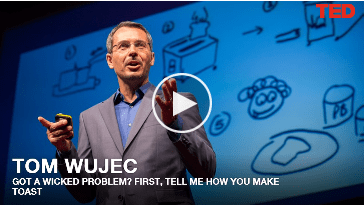
Process Mapping: How to Make Toast by Tom Wujec

Read more ›

Tagged with: , ,
Posted in All, Kanban, Lean Toolbox, TED Talks & Other Videos

We Don’t Make Widgets

Or do we? If you are ready to shake up everything you think you know about the way government works, this might be a great place to start. Read more ›

Tagged with: , , ,
Posted in All, Behavioral Economics, Bibliography

Under New Management: How Leading Organizations Are Upending Business as Usual

“According to extensive and global research from the Gallup organization, only 13 percent of workers worldwide are engaged in their work” (as cited in Burkus, 2016, p. 208). As employees continuously seek careers that better mesh with their personal lifestyles, rigid organizations resistant to change are loosing out on opportunity–especially with human capital.

Read more ›

Tagged with: ,
Posted in All, Bibliography, Change Management

Lean Coffee Meeting

“When we invite people to meetings and we give them a strong agenda upfront, we are completely robbing ourselves of all of the wisdom that the meeting attendees would bring with them.”

–Jim Benson, 2014

Read more ›

Tagged with: ,
Posted in Facilitation, Lean Toolbox

The Power of Habit: How to Ignore Chocolate Chip Cookies 

Read more ›

Tagged with: , ,
Posted in All, Motivation, TED Talks & Other Videos

Lean Coffee

Brilliant!

Read more ›

Tagged with: , ,
Posted in All, Project Management, TED Talks & Other Videos

Behavioral Economics TED

Read more ›

Tagged with: ,
Posted in All, Behavioral Economics, TED Talks & Other Videos

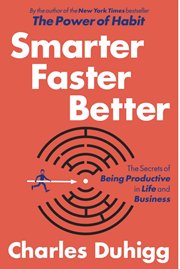
Smarter Faster Better

Smarter Faster Better is a book about perception and how viewing any given situation from a series of windows can improve the outcome. We live in a world inundated with information. Finding the answers is not a difficult exercise. Nonetheless, understanding what to do with those answers presents an increasingly challenging task. Read more ›

Tagged with: , ,
Posted in All, Bibliography, Motivation

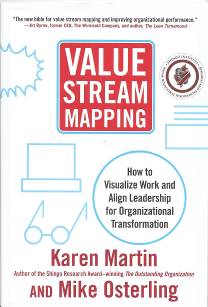
Value Stream Mapping

Understanding how work flows through an organization is paramount to delivering a customer’s request in an accurate and timely manor. Every industry, from service to manufacturing, hospitality and even healthcare, could benefit from value stream mapping. Nonetheless, it has been my experience that this is the missing link within a wide array of struggling organizations. I might have curbed mass frustration if this book had only been published earlier in my professional career. Read more ›

Tagged with: , ,
Posted in All, Bibliography, Project Management

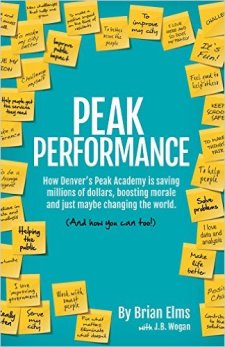
Peak Performance


Challenged with budget shortfalls and economical mayhem from the recent 2007-2011 financial crisis, Peak Performance founders Brian Elms, Brendan Hanlon, David Edinger and Scotty Martin discovered an interesting phenomenon: Read more ›

Tagged with: , , ,
Posted in All, Bibliography, Change Management
Blog Categories
Contact Me

Enter your email address to follow this blog and receive notifications of new posts by email.

Join 2,424 other subscribers